
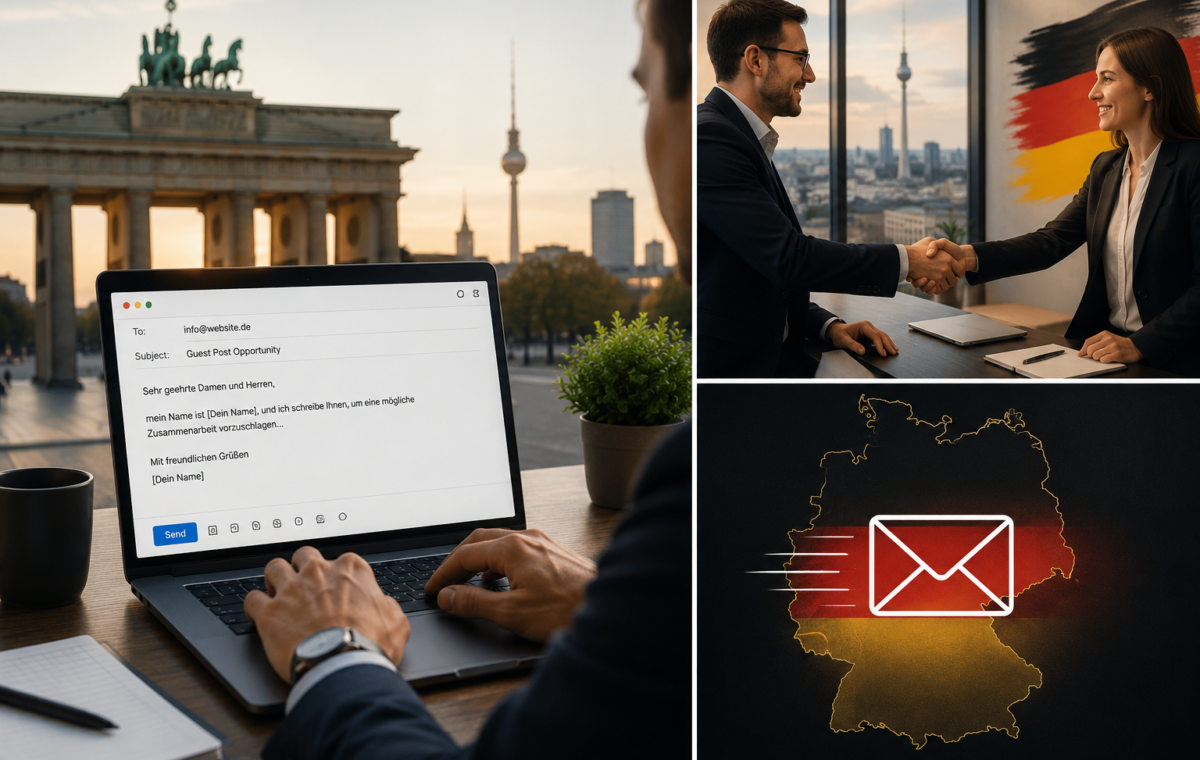
Here’s a pattern we see constantly: an outreach template pulls steady replies in the US and UK, then goes completely silent the moment it crosses into the DACH market. Same offer, same sites, same budget. The offer usually isn’t the problem. The approach is.
German outreach etiquette runs on a different set of rules, and publishers there don’t warn you when you break them. They just delete the email. This guide covers what German, Austrian, and Swiss editors actually expect from a first message — and where most English-language campaigns quietly fail.
Why the same template dies in Germany
Business culture in the German-speaking market rewards preparation. Publishers get pitched constantly, and weak messages get filtered fast — not because editors are hostile, but because a sloppy first email answers the only question they care about: does this person respect my time?
The upside is real, though. Relationships in this market build slowly and then last. An editor who accepts one properly prepared guest post is often open to working with you again, and in our own DACH campaigns the second placement with a publisher has consistently been easier to land than the first. <!– OWNER: replace or support this line with a real number, e.g. reply rate or repeat-placement rate –> [add your real campaign figure here, or delete this sentence]
Patience isn’t a nice-to-have here. It’s the actual competitive advantage.
Sie, last names, and yes — the doctor title
Default to formal. That means the last name, the formal Sie, and the academic title if the person has one. If you’re writing to Dr. Anna Weber, the greeting is Sehr geehrte Frau Dr. Weber — not “Hi Anna.”
A casual first-name opener in a first message reads as presumptuous rather than friendly. Let the other side relax the tone first; never make that switch yourself. And keep the register consistent through the whole thread. Dropping the greeting after the second reply is normal in American email culture. In Germany it comes across as careless, like you stopped trying once you got a response.
Say what you want in the first three lines
No warm-up small talk. Who you are, why you’re writing, what you’re proposing — that’s the opening, not the middle.
Experienced German editors treat vague “collaboration opportunity” language as a warning sign, so name the arrangement plainly: a guest article, a content partnership, an expert contribution. Then back it up with specifics — proposed topics, word count, delivery timeline. A subject line like Gastartikel-Vorschlag: [topic] outperforms anything clever, because it tells the editor in four words whether the email is worth opening.
What doesn’t work: inflated enthusiasm, exaggerated claims, and pressure tactics. Decision makers in this market respond to logic and detail. Hype reads as a red flag, not as energy.
The Impressum is the best research tool you’re ignoring
Personalized messages beat mass campaigns everywhere, but Germany makes personalization unusually easy — and therefore makes the lack of it unusually obvious.
German law requires commercially operated websites to publish a legal notice, the Impressum, naming the site operator (§ 5 of the Digital Services Act, the DDG). Austria and Switzerland have similar rules. In practice that means the responsible person’s real name is one click away in the site footer, on almost any site you’d want to pitch.
So “Dear Webmaster” doesn’t just look lazy. It proves you skipped a ten-second check that the recipient knows takes ten seconds. Use the actual name, reference a recent article, and say why your topic fits their readership. And think twice before blasting identical emails at scale — burned publishers remember sender names, and you may want to contact them again next quarter.
Follow up once. Not before a week.
Editorial replies can take longer than you’re used to, and slow doesn’t mean no. Give it seven to ten days, then send one short, polite reminder. That’s it. Chasing someone twice in the same week marks you as a spammer and closes the door for good.
When the reply does come, brace for bluntness. A German publisher may tell you straight that your price is too low or your draft isn’t good enough. That’s not rudeness — direct feedback is simply the standard register, and it’s more useful than a polite ghosting. Answer professionally and the relationship survives for the next campaign.
Frequently Asked Questions
How is German outreach etiquette different from US or UK outreach? Three things: formality, directness, and pace. Formal address with last names, a purpose stated in the opening lines, and slower decisions with minimal follow-up. Charm and persistence, which carry weak pitches in English-speaking markets, actively hurt you here.
Should outreach emails to German publishers be written in German or English? Well-written German wins. Machine-translated German loses badly — errors in formal address are glaring to native speakers. If your German isn’t solid, write in clear, simple English and acknowledge the language choice in one polite line. Many editors will answer in English; the point is showing you thought about it.
How long should a German outreach email be? Under 150 words is a good target. Clear subject line, one-line introduction, the concrete proposal, polite close. Padding signals a template.
How many follow-up emails are acceptable? One, after seven to ten days. A second follow-up rarely changes the outcome and may get you flagged as spam.
Why do German website owners take longer to reply? Decisions are considered rather than impulsive, and quality checks come before speed. A slow response usually means your pitch is being evaluated — not ignored.
One last thing
Everything above compresses into a single habit: treat each German publisher as a long-term partner, not a line in a spreadsheet. Formal greeting, purpose up front, real personalization, one patient follow-up. Do that consistently and the DACH market stops being the region where your templates go to die — and becomes one of the most loyal publisher networks you can build.